
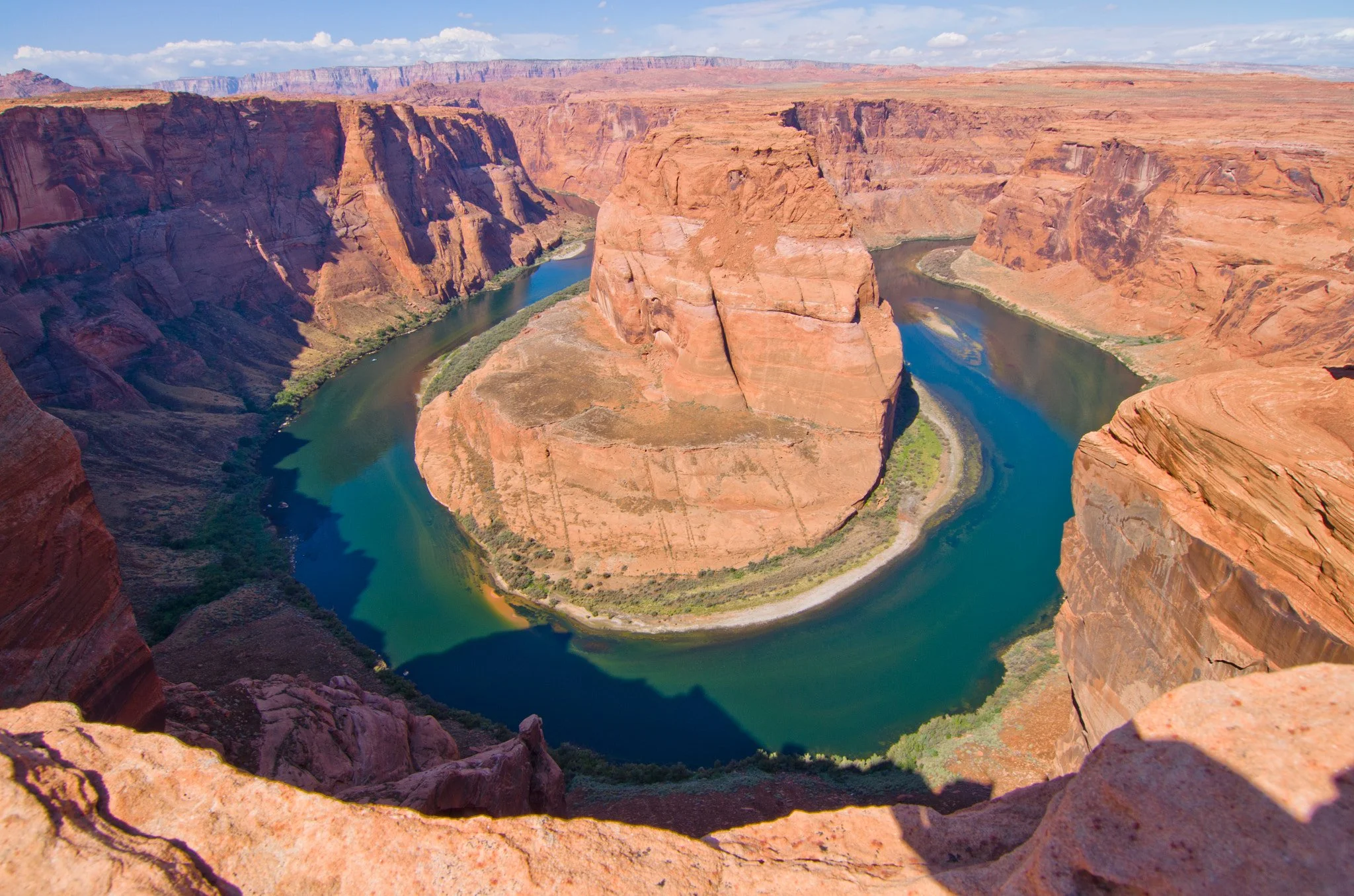
Colorado River Compact of 2030
overview
The Colorado River provides water security to over 40 million people in seven US states, 30 Native American tribes, and two Mexican states. Over the last few decades, the US Southwest has experienced severe levels of drought which are exacerbated by both climate change and overextraction of water resources. To provide further context, the original compact that apportioned water from the Colorado was based on an estimate of the flow that no longer exists- due in large part to the above mentioned issues.
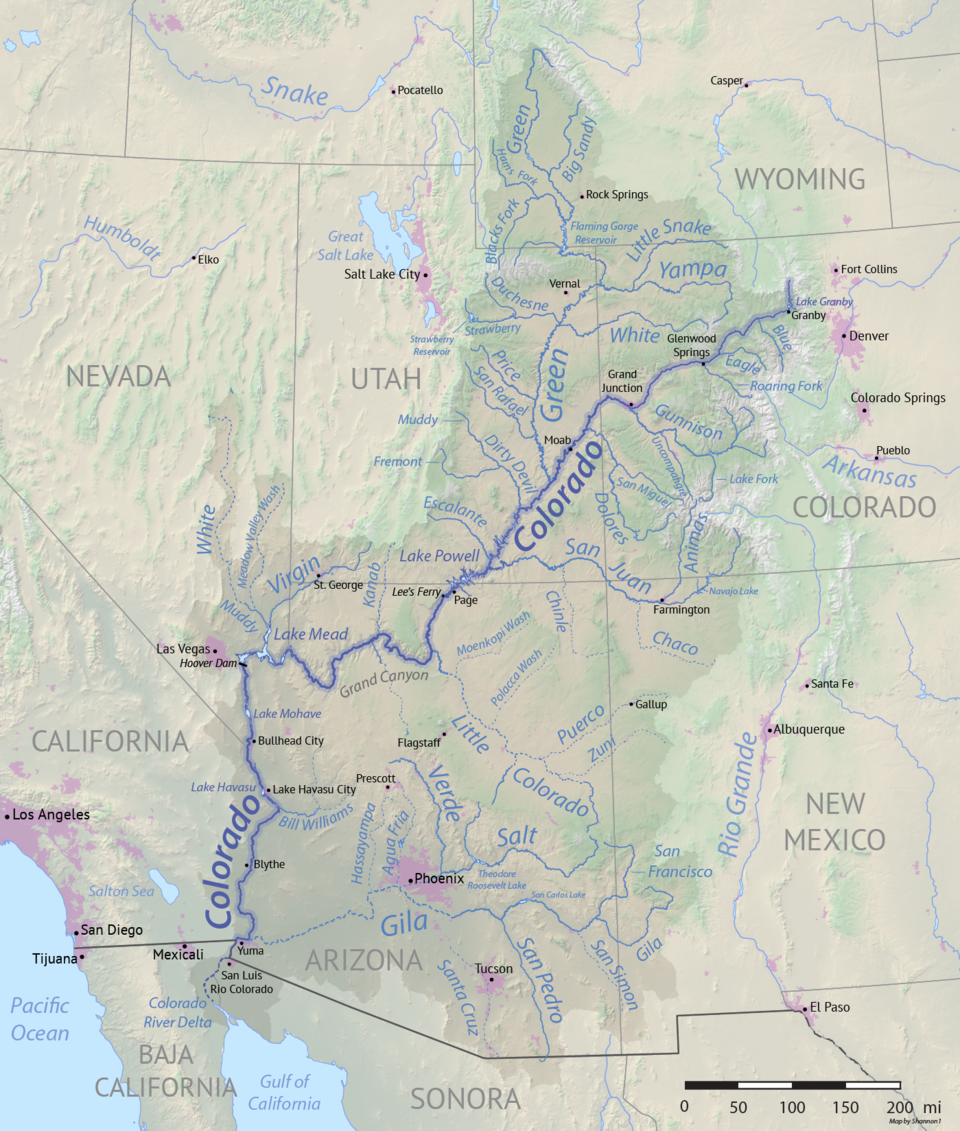
By 2026, the Colorado River compact is set to expire along with a number of other important water rights treaties affecting the Southwest region. Those states impacted by the compact must then find a compromise which preserves the rivers' waters for future sustainable use, while also heeding the precedents set by past legal battles. According to the original agreement, the division of the upper and lower basins is defined by the end point of tributary rivers at a location north or south of the location of Lee Ferry in northern Arizona. However, this division of the basins would include some states in both categories. As such, modern conventions include the states of Colorado, Utah, Wyoming, and New Mexico in the upper basin, while the states of Arizona, Nevada and California are in the lower basin.
This committee will draw on the legal, economic, and ethical considerations that surround the renegotiation of water rights to the Colorado. Many historic developments -such as California’s senior water rights and Arizona’s Central Arizona Project- have caused controversy among compact states in the past. The massive infrastructure projects and environmental changes impacting the river since 1922 have led to a situation that is untenable under historic apportionment standards. Delegates will be tasked with finding innovative ways of meeting every party’s needs while balancing long-term consequences of new apportionment standards.
committee structure
As one of the traditional committees for DevilMUN I, this scenario will call for as many as 18 delegates, and can function with as few as 7. Traditionally, the legal negotiation of water rights for the Colorado would draw upon water commissioners from each state mentioned in the original compact. As was discussed, we have decided that the best way to represent all the negotiation’s interests would be to add 4 special delegates to the committee, followed by 7 additional delegates for each state. This would allow us to structure the committee as follows:
Core team: 7 compact states, given full voting rights;
In consideration of the real-world status of treaty negotiations, it can be assumed that water commissioners would be appointed to represent state interests in the negotiations. The chairs can decide how to define this role as they see fit, and if the delegates will represent the entire range of their states interests during the negotiations. (In the event of multiple delegates being assigned to this committee, see below)
Additional 7 State Delegates:
In the event that we are able to secure a sufficient number of delegates, we would add an additional representative of each state to the committee.
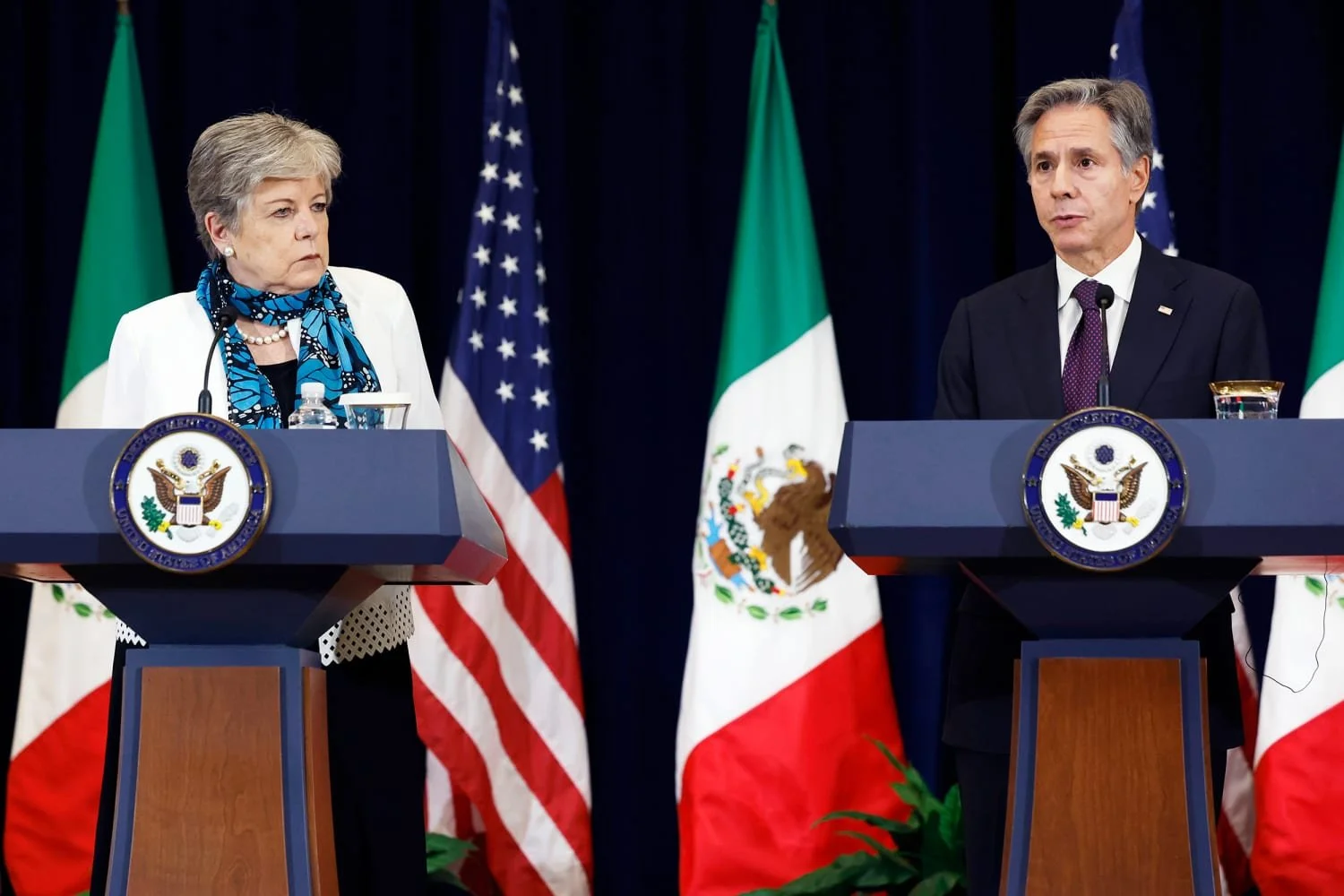
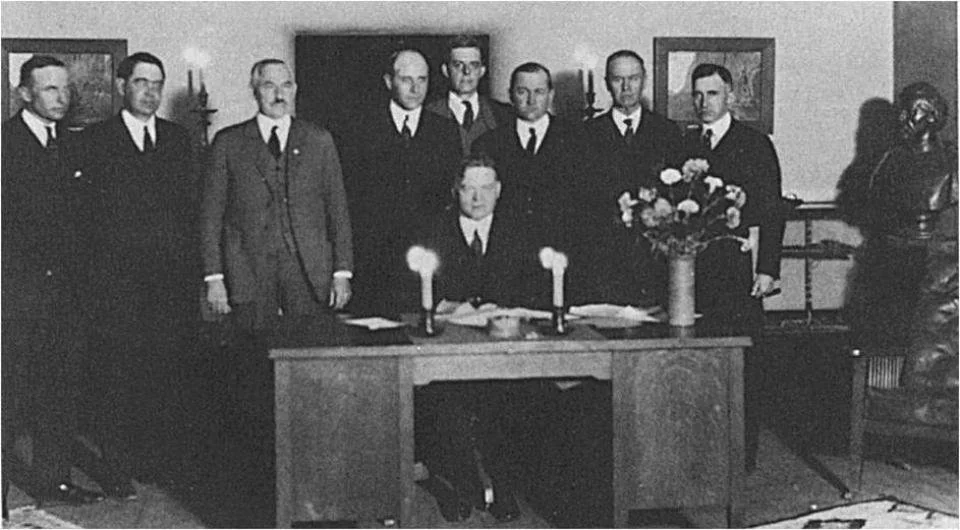
Special actors: 2 members of the presidential cabinet most relevant to the negotiations: These special actors will have unique voting rights as is determined by the chairs. By including actors apart from the core states, the negotiations have the potential to be more intricate and realistic. That being said, it will be crucial to make sure that delegates can only use their voting power appropriately and in a way that makes debate compelling and equitable.
Your chairs

HEAD CHAIR - Liam Nelson
CO CHAIR - Lenliza Bamfield